


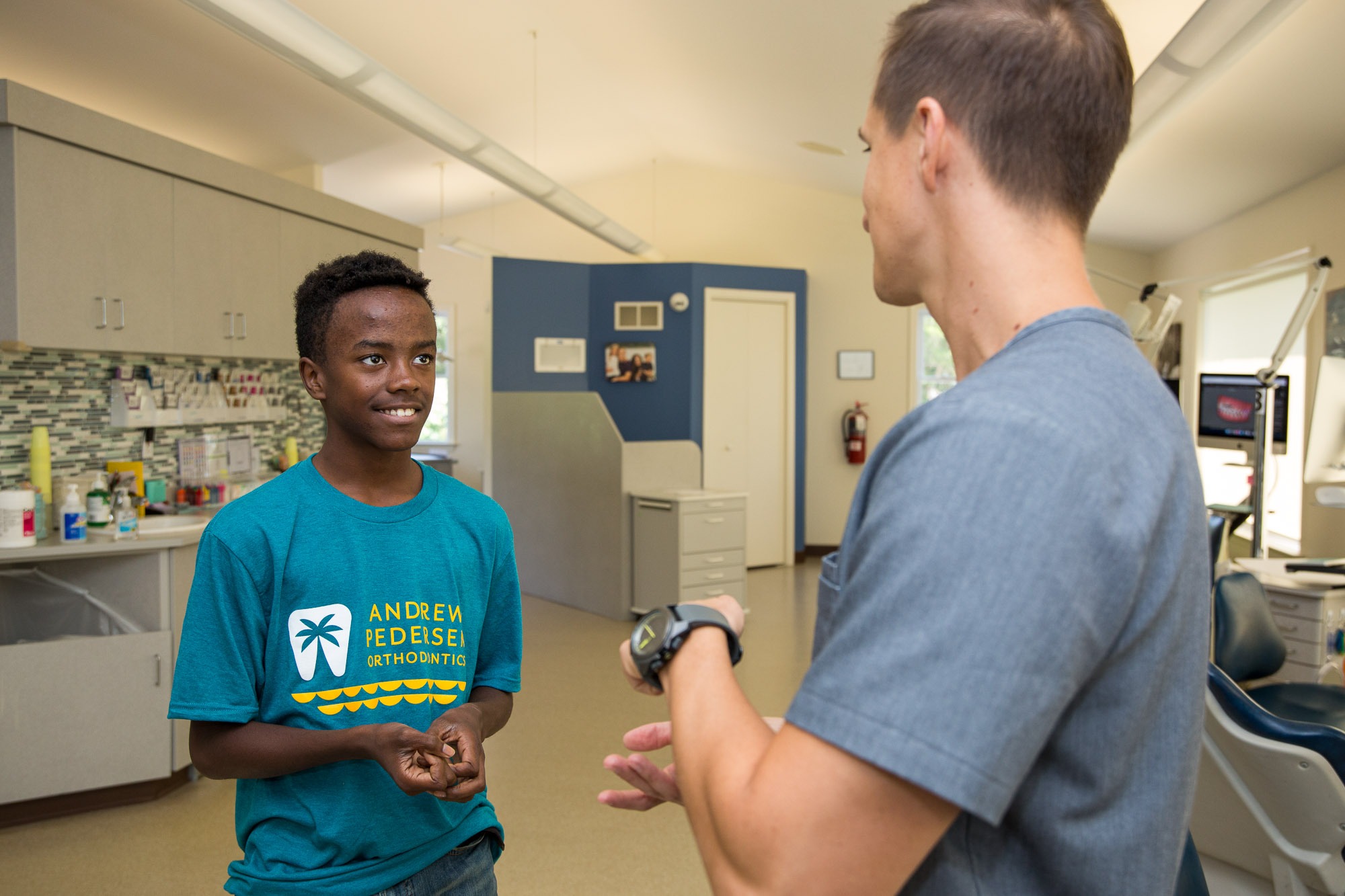
What is a digital orthodontic scan? It’s a 3D digital model of your teeth, gums, and bite, captured in just a few minutes using a handheld intraoral scanner. At Andrew Pedersen Orthodontics, with offices in York and New Freedom, PA, Dr. Pedersen uses digital scans instead of messy putty trays to plan clear aligners, braces, retainers, and every step in between.
The scanner works with optical imaging. That means no radiation, no gooey material, and no gagging. You sit back while a small wand glides around your teeth, building a full-color 3D model on a monitor right next to you. In 3-5 minutes, Dr. Pedersen has a precise digital file ready to share with clear aligners labs or dental labs.
Digital scans are now the standard of care for modern orthodontics. Common systems include iTero, 3Shape TRIOS, Medit, and Primescan. Dr. Pedersen relies on this technology to deliver accurate treatment plans and a more comfortable experience for you and your family. With more than 30 years of making you smile, the team has watched this technology grow from a novelty into an everyday tool that improves nearly every part of the treatment process.
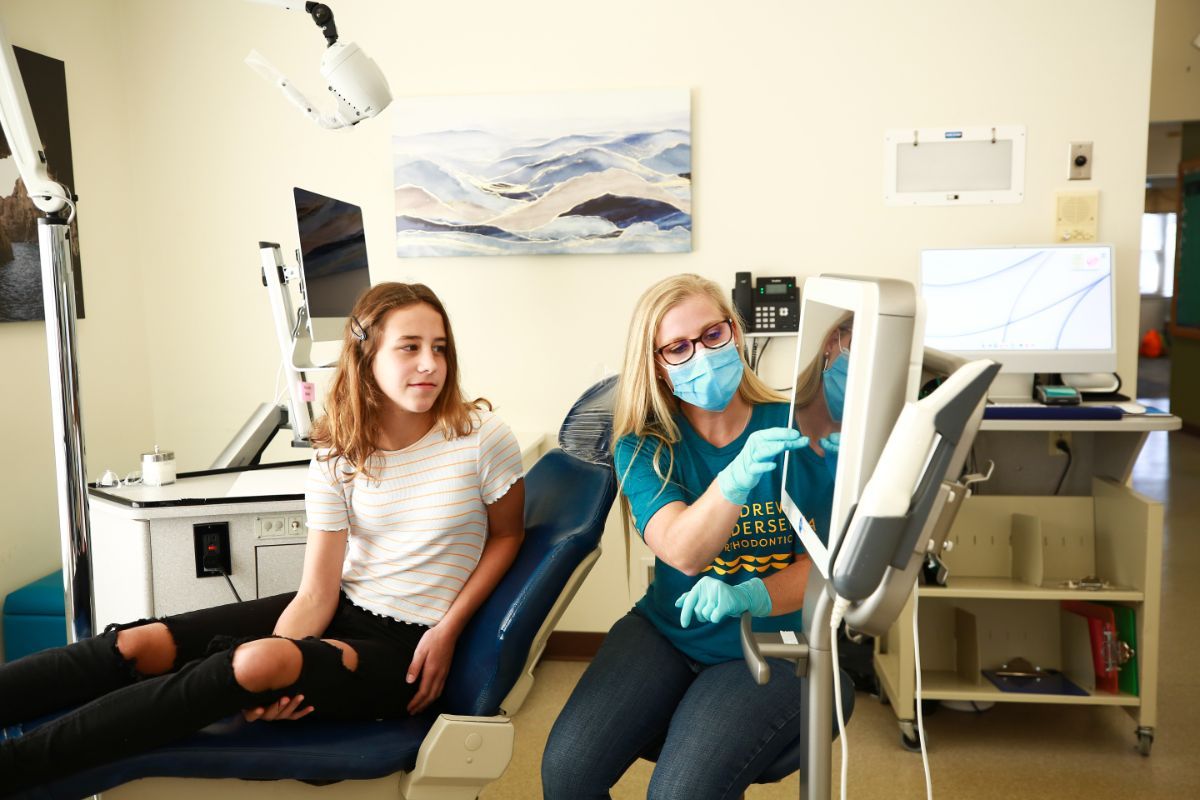
How a Digital Orthodontic Scan Works
The process is quick and non-invasive. Dr. Pedersen and the team walk you through each step so you know what to expect. Here’s how an intraoral scanner captures your smile from start to finish:
- Prep your teeth. A team member gently cleans and dries your teeth so the scanner can read every surface clearly. No numbing, no trays, no prep paste.
- Begin the scan. The handheld wand uses optical and laser imaging to capture many images per second as it moves over your upper teeth, lower teeth, and bite. You can breathe, swallow, and even talk during the scan.
- Watch your 3D model build in real time. The images stitch together on a chairside monitor, creating a full-color 3D orthodontic scan of your teeth and gums as it happens. Most people find it fascinating to see their own smile rotate on the screen.
- Review and refine. Dr. Pedersen checks the model for any gaps or missed areas. If a spot needs more detail, the scanner fills it in right then. No retakes, no do-overs, no sitting through a second full set of impressions.
- Send the digital file. The completed scan goes directly to the clear aligners manufacturer or a dental lab for aligners, retainers, or appliance fabrication.
Because the process is purely optical, there is no radiation involved. The entire scan typically takes 3-5 minutes, a welcome change from the 10 or more minutes required for traditional impressions.
Benefits of Digital Orthodontic Scanning
Digital impressions bring real advantages to your visit, your treatment plan, and your final results. Here’s what you gain when Dr. Pedersen uses an intraoral scanner instead of putty trays.
How Does a Digital Scan Improve Comfort?
With a digital scan, there’s no thick putty filling your mouth, no trays triggering your gag reflex, and no waiting for material to set. You sit back while the wand does the work. The small handheld tool slides gently around each tooth, so you can breathe, swallow, and relax through the whole visit. For anyone who has ever dreaded the putty tray, this is often the most noticeable upgrade.
How Fast Is a Digital Orthodontic Scan?
A full-arch digital dental scan takes about 3-5 minutes. Traditional impressions can take 10 minutes or more, plus extra time if a tray needs to be redone. That speed adds up over the course of treatment, especially for busy families juggling school, work, and after-school activities.
How Accurate Are Modern Intraoral Scanners?
Modern intraoral scanners capture a very high level of surface detail, which helps reduce the need for remakes on aligners, retainers, and appliances. Better accuracy usually means better-fitting treatment from day one, and that often translates into fewer back-and-forth visits for adjustments.
What Can You See During Your Scan?
You can see your own 3D model on the monitor during your visit. Dr. Pedersen can zoom in, rotate the image, and show you exactly what he’s planning for your smile transformation. Many people say this is the first time they’ve truly understood what’s going on with their bite.
Can You Preview Your New Smile?
Often, yes. Depending on the scanning software, a scan can be used to show a preview of what your smile could look like after clear aligners treatment. Seeing a before-and-after image before you even start is a strong motivator, and it helps you feel confident about the plan ahead.
How Are Digital Scans Stored and Shared?
Your scan lives in a secure digital file, which is simple to share with specialists or revisit later. No plaster models sitting on a shelf collecting dust, and no waiting for a package to arrive at a lab. Digital files also integrate directly with 3D printing and clear aligners manufacturing, which can shorten the wait between your scan and your first set of aligners or retainers.
Why Are There Fewer Surprises With Digital Scans?
Because Dr. Pedersen reviews your scan while you’re still in the chair, any issues are caught right away. You leave knowing the next step with confidence, and you won’t be called back later to redo records that didn’t turn out the first time.
Digital Scans vs. Traditional Impressions
If you’ve ever had putty impressions before, you already know why so many people prefer digital. Here’s a side-by-side look at how the two approaches compare:
| Feature | Digital Scan | Traditional Impression |
|---|---|---|
| Time | 3-5 minutes | 10+ minutes |
| Comfort | Small handheld wand | Putty-filled tray in mouth |
| Gag reflex risk | Very low | Common trigger |
| Accuracy | Very high surface detail | Good, but material can distort |
| Remake rate | Low; retakes done instantly | Higher; full redo if flawed |
| Storage | Secure digital file | Physical plaster models |
| Sharing with labs | Instant electronic transfer | Shipped by mail or courier |
| Mess | None | Setting putty, cleanup required |
Traditional impressions use trays filled with putty that must set in your mouth for several minutes. The material can shift, trap air bubbles, or trigger your gag reflex, which sometimes means starting over.
Digital scans skip all of that. The wand captures your teeth optically, builds the model in real time, and lets Dr. Pedersen touch up any missed areas without starting over. The digital file can also be reused for future appliances, so you may not need to be rescanned every time you need a new retainer.
Digital files also pair well with 3D printing. That combination can shorten the time between your scan and your finished retainer or aligner tray.
Who Is a Candidate for a Digital Scan?
Digital scans work for almost everyone who walks through our doors. If you can sit comfortably with your mouth open for a few minutes, you’re very likely a good candidate. Common examples include:
- Children, teens, and adults starting any kind of orthodontic treatment
- Clear aligners patients who need precise models for custom trays
- Clear braces and metal braces patients who need treatment planning records
- Retainer wearers who need new or replacement retainers fabricated from a current scan
- Patients with a strong gag reflex who’ve had a rough time with putty impressions in the past
- Progress tracking throughout treatment, so Dr. Pedersen can compare scans over time
- Virtual consult and virtual visit patients who benefit from digital records for remote review
Digital scanning is also helpful for patients with sensitivities, dental anxiety, or limited jaw opening. The wand is small and the process is flexible, so most people find it much easier than traditional impressions.
If you’re not sure whether a digital scan is right for you or your child, a free consult with Dr. Pedersen is the easiest way to find out, whether you’re visiting from York, New Freedom, or Hanover. The team at Andrew Pedersen Orthodontics is happy to answer any questions you have before you ever sit in the chair, and they’ll walk you through what to expect so your first visit feels familiar. Ready to see your smile in 3D? Schedule your free consultation today at our York or New Freedom office and experience the difference a digital scan can make.

Frequently Asked Questions
How long does a digital orthodontic scan take?
A digital orthodontic scan typically takes 3-5 minutes from start to finish. That includes scanning the upper teeth, lower teeth, and your bite. Dr. Pedersen can review the model right there in the office, so you won’t need to schedule a second visit just for records.
Are digital dental scans safe?
Yes. Digital dental scans are safe and use no radiation. The intraoral scanner relies on optical and laser imaging to capture the surfaces of your teeth and gums. It’s one of the safest and least invasive diagnostic tools in modern orthodontics.
Does a digital scan hurt?
No, a digital scan is not uncomfortable. The wand is small, smooth, and gently glides around your teeth without any pressure or sharp edges. There’s no numbing needed, no needles, and no recovery time. Most people find it more comfortable than a routine dental cleaning.
How does a clear aligners scan work?
A clear aligners scan uses an intraoral scanner to capture a 3D model of your teeth. Dr. Pedersen reviews the scan, then sends the digital file directly to the manufacturer, where your custom clear aligners are made. Depending on the software, the scan can also be used to preview your projected results, so you can see where your treatment is headed before you start.
What are the downsides of digital dentistry?
The main downsides of digital dentistry are the technology and training a practice has to invest in. For you and your family, there are very few drawbacks. The scan is quick, safe, and more comfortable than putty impressions, and the digital file is more accurate and easier to share.
How accurate are digital scans compared to putty impressions?
Digital scans are generally equal to or better than traditional putty impressions in terms of accuracy, capturing fine surface detail across the full arch. Because Dr. Pedersen can review the model in real time and fix any missed areas on the spot, digital scans also tend to produce fewer remakes on aligners and retainers. That accuracy is one reason Andrew Pedersen Orthodontics has leaned into digital workflows, and it’s part of what keeps the team making you smile, visit after visit.